Reservoir
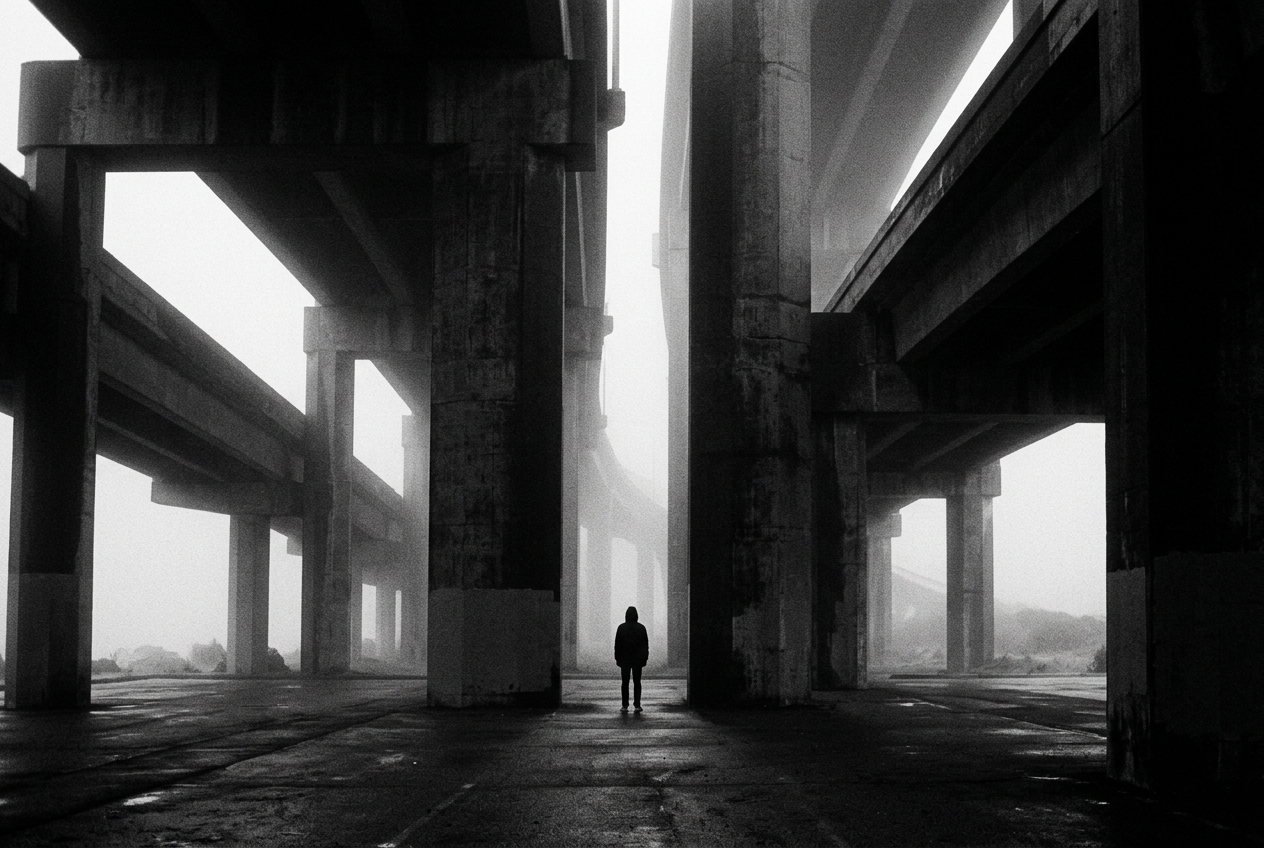
Frame 04A · 2021 · 40 × 50 cm · gelatin silver on fibre
Edition 7 of 12 available
€ 1,400
Enquire
A monograph in six frames · 2019–2024
Five winters on the North Mole with one camera, one lens, and four hundred feet of black-and-white film. What the fog left behind is printed here.
Open the sleeveSix frames survived the edit. Click any frame to view the print full-bleed; the grease-pencil circle marks the selects. Arrow keys move along the strip.
36 exposures · 6 kept · 30 returned to the fog
Fog is the only weather that edits. Rain adds; snow decorates; sun explains everything it touches. Fog subtracts. It takes a working harbour — cranes, containers, gulls, noise — and hands you back three bollards and a question. Every photographer says they are drawn to light. I went to the North Mole for five winters because I was drawn to its absence.
The pictures in this sleeve were all made within a kilometre of each other, between six and nine in the morning, in the weeks when the sea is warmer than the air. That is the whole method. Fog of that kind is not mist; it has mass. It moves through the concrete pilings of the overpass like a congregation filing into a church, which is how frame 22A got its name, and it swallows the water tower from the feet upward, so that for twenty minutes the tank hangs in the sky with nothing holding it there.
“A print is a decision about how much darkness you can defend.”
— darkroom notebook, feb. 2023
Shooting HP5 at 1600 in flat fog light is, by every sensible measure, wrong. The negatives come out thin and furious. But push-processing does to film what fog does to a landscape: it destroys the middle. You are left with paper-white and near-black and almost nothing in between, and the grain grows until it becomes weather of its own. The pictures are not sharp. They were never going to be sharp. They are certain, which is different.
People ask about the figures — who they are, whether they were placed. They were not. If you stand in fog long enough, someone always walks into it. That is the other thing fog edits: company. It takes a crowded morning and returns one person, at exactly the distance where a stranger becomes a symbol. I never once saw a face out there. I have come to believe that was the point.
These six frames are printed by hand on fibre paper, in the same red dark where they were first seen. The fog did the composing. I only agreed with it.
— M. Verlaine, North Mole, winter 2024
Each frame is printed by the photographer on Ilford Multigrade FB Classic fibre paper, selenium-toned for permanence, signed and numbered in pencil on the verso. Editions of twelve, plus three artist's proofs. When an edition closes, it closes.
Frame 04A · 2021 · 40 × 50 cm · gelatin silver on fibre
Edition 7 of 12 available
Frame 09A · 2022 · 40 × 50 cm · gelatin silver on fibre
Edition 4 of 12 available
Frame 13A · 2022 · 50 × 60 cm · gelatin silver on fibre
Edition 9 of 12 available
Frame 17A · 2023 · 40 × 50 cm · gelatin silver on fibre
Edition 11 of 12 available
Frame 22A · 2023 · 50 × 60 cm · gelatin silver on fibre
Edition 2 of 12 available — nearly closed
Frame 27A · 2024 · 40 × 50 cm · gelatin silver on fibre
Edition 8 of 12 available